



Let me tell you about Belinda. She came to me after years of bouncing between specialists. She had Hashimoto’s Thyroiditis, an autoimmune disease where the immune system attacks the thyroid, fibromyalgia pain that made everything hurt and kept her up at night, and brain fog so bad she could barely function at work. She was 46 years old and felt 80. She had tried everything. Nothing had helped very long or very much.
When we added Low-Dose Naltrexone to her plan, something shifted. Not overnight, and not from LDN alone, but the pain and inflammation began to ease. And that changed everything.
Belinda is not unique. I have seen versions of her story dozens of times over the past 23 years.
What Is LDN?
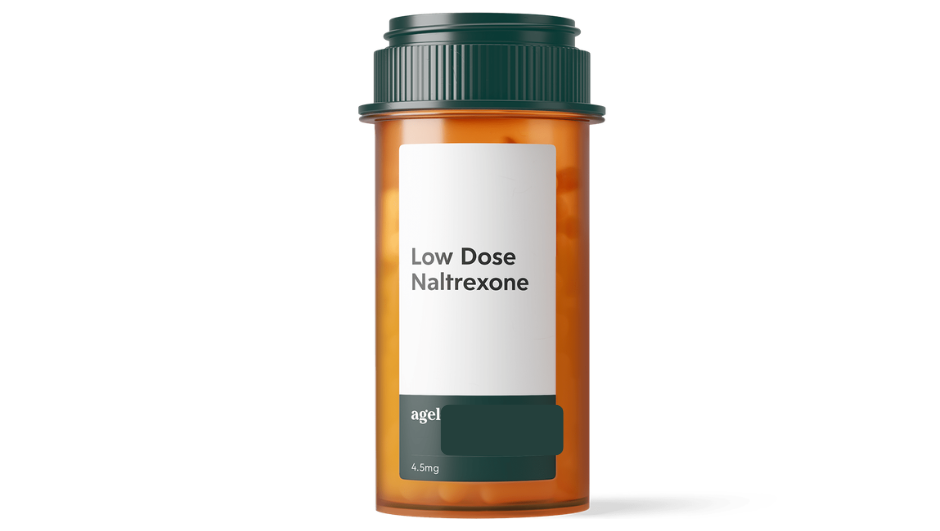
Low-Dose Naltrexone, or LDN, is an old medication being used in remarkable new ways.
Naltrexone has been around since the 1980s. At high doses, it was used to treat opioid addiction. It works by blocking the part of the brain that responds to opioids, which is why it helped people recover from addiction.
But at very low doses, we’re talking about a fraction of the original dose, something interesting happens. The drug behaves completely differently.
LDN is not a narcotic. It is not addictive. It does not make you feel high or sedated. It is not an immune suppressant.
Think of it more like a gentle reset button for an immune system that has forgotten how to calm down.
Your Immune System Has an Alarm
Imagine your immune system controls a fire alarm system, like the one in your house. Normally, the alarm sounds when there is real danger, such as infection or injury, or you burned the toast, and then quiets down once the problem is solved.
But in autoimmune and chronic inflammatory conditions, the fire alarm can become oversensitive. It keeps firing even when there is no true emergency. Over time, that constant alarm starts damaging the body, including joints, skin, thyroid, gut, nerves, and the brain.
Most treatments for autoimmune disease try to silence the alarm by suppressing a part of the immune system — essentially ripping out the batteries. That can help, but it also leaves you vulnerable, because now your alarm won’t work when you need it.
LDN tries to do something different. Instead of suppressing the alarm system, it helps retrain it, so it goes off when it should, and quiets down when it should.
How Does It Work?
Your body makes its own natural calming signals all the time. These signals help regulate inflammation and keep your immune system from going haywire.
Here is where LDN does something clever.
When you take LDN, it briefly and gently blocks those natural calming signals for just a few hours. Your body sees there isn’t enough and responds by making more.
As the LDN wears off over the following hours, your body has ramped up its own natural calming signals — more than it was making before. The result is a stronger, healthier immune-regulating system.
LDN also works on inflammation in the brain and nervous system, also the skin and the gut.
There are specialized immune cells in the brain called microglia. When they get overactivated, they release chemicals that cause pain, fatigue, brain fog, poor sleep, and mood problems. LDN appears to help calm those overactivated brain cells as well as nerves that cause pain signals.
Mast cells are inflammatory cells found in the skin, gut, and nervous system that release histamine and inflammatory chemicals. LDN may help stabilize mast-cell activity, which may be part of why it may helps with psoriasis, IBS, and some allergy-type inflammatory symptoms.
Nerd Box: The 3 Receptors Behind LDN
OGFr (Opioid Growth Factor receptor):
A receptor involved in immune regulation and tissue repair. LDN briefly blocks it, stimulating the body to increase its own healing and balancing signals afterward.
TLR4 (Toll-Like Receptor 4):
An inflammatory “alarm” receptor found on immune cells, including brain immune cells, and inflammatory cells in the skin and gut. LDN appears to calm this pathway, which may help reduce neuroinflammation, immune overactivation, and inflammatory skin conditions like psoriasis.
Opioid receptors (mu, delta, and kappa):
The receptors involved in endorphins, pain relief, and narcotics. LDN briefly blocks them, which may trigger the body to produce more of its own natural endorphins afterward.
Who Might Benefit?
I consider LDN in patients with any autoimmune disease, and any chronic pain syndrome, and several other chronic hard to treat conditions.
In many of patients, but not all, I see real improvement. Not just in symptoms, but in lab markers as well. In Hashimoto’s, for example, thyroid antibodies often drop by half after 6 to 12 months. That tells me something is changing in how the immune system is behaving, not just how the patient feels.
What Does the Research Say?
The honest answer is promising, but sadly, limited.
Most importantly, studies have universally shown LDN to be remarkably safe.
Side effects are uncommon, and when they do happen, usually vivid dreams, mild insomnia, or brief nausea, they tend to go away as the body adjusts.
The evidence for effectiveness varies depending on the condition. Some studies show meaningful benefits. Others show more modest results. This doesn’t surprise me, because most studies group many different conditions together and use the same dose for everyone, and LDN really needs to be adjusted individually.
It’s also worth noting that LDN is inexpensive and has no funding for research, which means large clinical trials are hard to find. The absence of big studies does not mean it does not work. It means the incentives to run those studies does not exist.
Research is a map, not the road. The map matters. But when there is no map, you evaluate benefits and risks and you pick a path. Chronic pain is a terrible disability, Autoimmune disorders are increasing at an alarming rate. Current medical treatments leave too many with bad or no options.
One Important Caution
Because LDN temporarily blocks opioid receptors, LDN should not be taken with opioid pain medications. These are things like oxycodone, hydrocodone, codeine, tramadol or morphine. You can easily stop LDN if, for example, you need surgery and might need narcotic pain medications for a short time. But in general, folks on chronic narcotic pain medication should not take LDN.
LDN does not interact with ibuprofen, aspirin, acetaminophen, or any other common medications, nor with any supplement.
Back to Belinda
The last time I saw Belinda, she was training for a half-marathon.
Yes. The woman who was in chronic pain was training for a half-marathon.
But I want to be clear, LDN did not do that alone. It played a big part but was also a catalyst.
Because her pain eased, she could sleep a little better. When she slept a little better, she had a bit better brain, and then more energy. And when she had slightly more energy, she could start doing the things that she needed to do to regain her health, then her strength. The things chronic pain, fatigue and brain fog had made impossible, she was able and willing to do.
She started cooking real food again, adding colorful plant foods she hadn’t been able to manage before. We added concentrated whole-food plant powder, magnesium, vitamin D, and other nutrients she needed to rebuild after years of pain and exhaustion.
It’s hard to take good care of yourself if you are hurting every day.
LDN opened the door. Belinda walked through it.
I consider LDN one of my three favorite and most underused and underappreciated treatments for chronic pain and inflammation. The other two are photo-biomodulation therapy (such as cold laser and red lights) and cannabis-based therapies. None of them are narcotics. None of them suppress the immune system. All three are safe, when used properly, and can be life changing for some patients.
But to be clear, none are stand alone treatments. In my work, I cannot tease out the vital importance of nutrition, sleep, movement and in aggressively addressing, when possible, the underlying causes of pain. Brain-pain retraining techniques are often important in healing chronic pain. So is addressing trauma, grief, scars and more. The value of personalized medicine is obvious when I think of the many patients with chronic pain I have seen over the years.
LDN won’t work for everyone. Some patients notice very little change. But many experience meaningful, lasting improvement.
Ask your doctor. LDN requires both a prescription and a compounding pharmacy. It will not be covered or reimbursed by insurance. Fortunately, it is around $30 a month once the correct dose is established.
When a treatment is safe, inexpensive, and rooted in real biology — and when I have watched it change lives for more than two decades — I think we should be talking more about it.
If you have been struggling with chronic pain or an autoimmune disease and feel like you’ve run out of options, know that there may still be doors worth trying.
Dr. Tamara Sachs is an Internal Medicine and Functional Medicine physician with 33 years of clinical experience. She practices root-cause medicine, helping patients prevent, reverse, and manage chronic disease.